

What is Temperature Switch
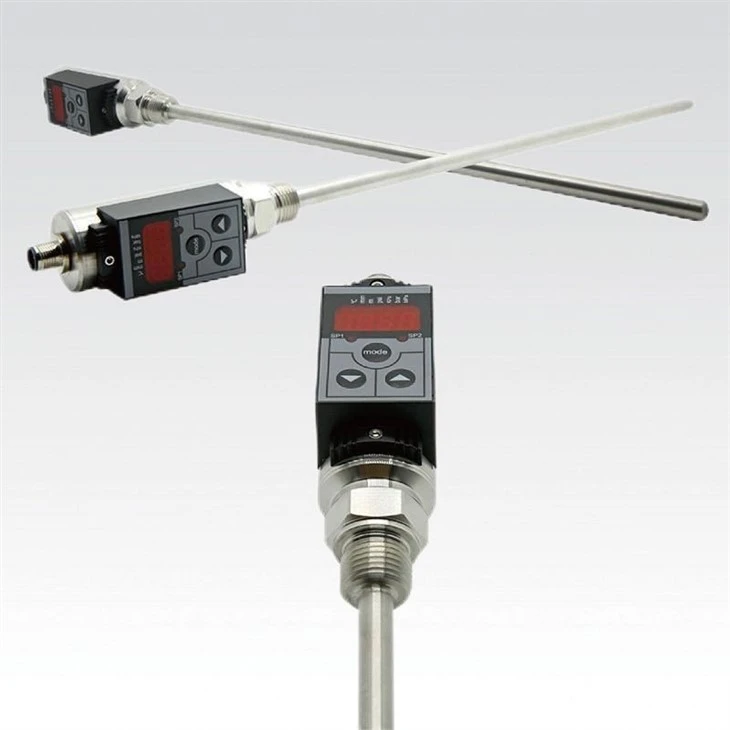
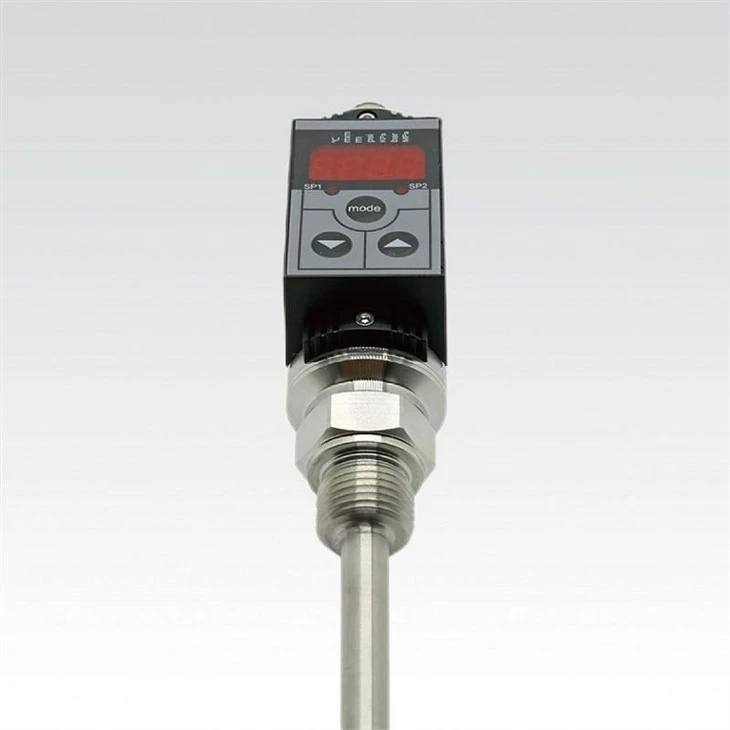
A temperature switch is one detecting the temperature of some substance. Temperature switches often use bimetallic strips as the temperature-sensing element, the motion of which actuates one or more switch contacts. An alternative design uses a metal bulb filled with a fluid that expands with temperature, causing the switch mechanism to actuate based on the pressure this fluid exerts against a diaphragm or bellows. This latter temperature switch design is really a pressure switch, whose pressure is a direct function of process temperature by virtue of the physics of the entrapped fluid inside the sensing bulb.
Advantages of Temperature Switch
Avoiding downtime through alerts when servers and network equipment are at risk of overheating.
Temperature monitoring sensors will allow users to set alerts for predetermined conditions. They will send an email or text to key staff if and when temperatures exceed predefined levels. This means that if something goes wrong, you or someone else is warned and thus may take action.
For example, it will warn you if the air conditioner breaks down. It will even notify you if the temperature in the room rises due to severe computer demands. Extreme temperature is among the most common reasons for hardware replacement. And, with a temperature sensor, you can avoid it.
Assuring adequate inlet and exhaust airflow.
You can determine the air travelling temperature in or out of your servers. All you have to do is install the temperature sensors on the front and rear of your server racks. This is necessary to guarantee that the cold airflow does not mix with the hot air moving in the room.
Further, the warm air emissions from your servers are within acceptable limits. Airflow devices can monitor the airflow into your server room and provide you with a warning if it pauses.
Extends the lifespan of your equipment
You should track the temperature and keep it within a proper temperature range. This will help extend the life of your equipment or central heating thermostat. That is to say; it will prevent extreme temperatures from going unreported and causing unnecessary wear.
Short spikes of extreme temperatures can impair dependability. It can lead to device breakdown months later, even if they are not immediately noticeable.
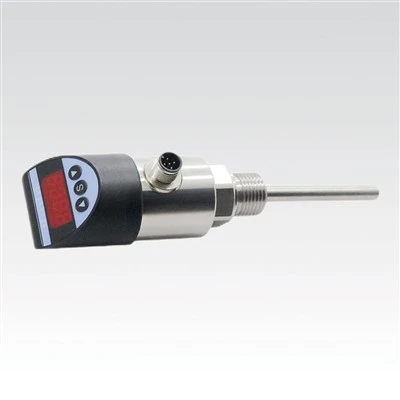
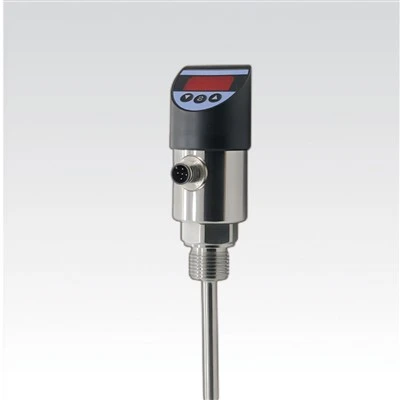
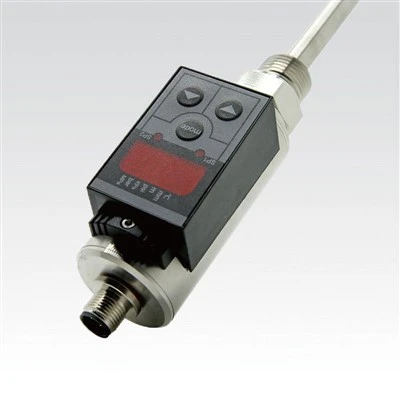
Why Choose US
Our Factory:Shanghai Ziasiot Technology Co., Ltd. is an experienced manufacture of pressure and temperature sensors, transmitters.
Products:The main products developed and produced by our company consist of multiple series, including wireless sensors, flow sensors, linears, pressure sensors, liquid level sensors, high temperature melt pressure sensors , melt pressure gauge, high temperature melt pressure transmitter, temperature sensor, fusion index instrument, pressure calibration system, smart digital instrument, blasting switch, smart home system, smart module, smart body scale, laboratory instrument, Internet of Things, and Automated complete control system.
Our Certification:In order to emphasize Our commitment to quality and reputation, the R & D and production process of all zias brands ensure to meet and possess RoHS, ISO, CE, CMC, CPA, ex and other certifications.
Production and Quality:ZiasIOT devotes itself to enhancing manufacturing industry and its productivity. The capability of controlling temperature and pressure in industrial field is vital to promote productivity and produce high-quality products.
Types of Temperature Switch
Mechanical temperature switches are available in two types bimetallic and liquid expansion temperature switches which are used for measuring or detecting the change in temperature.
The bimetallic temperature switch or bimetallic thermometer uses the bimetallic strip, which is used to change the temperature into mechanical displacement. Here, the bimetallic strip mainly uses the principle of metal expansion on heating. So when the temperature changes then the volume of metal will be changed.
The liquid-filled temperature switch or liquid-filled expansion thermometer includes a brass bulb that is filled with a gas or chemical fluid. It includes a fluid-filled bulb system. So at the thermometer bulb, a large amount of fluid is kept which has the maximum sensitivity. This enclosed fluid will expand once the bulb gets heated. So this liquid expansion will increase the fluid pressure within the bulb. The increase in fluid pressure will result in the activation of the pressure switch which is connected to the bulb.
The advantages of a liquid expansion thermometer include less cost, compact size, and more accurate whereas the disadvantages are; that response time is high, leakage occurs, resistant to temperature & shock, etc.
The temperature switch is a temperature switch sensor that uses a bimetallic sheet as a temperature sensing element. When the electrical appliance is working normally, the bimetallic sheet is in a free state, and the contact is in a closed/disconnected state. When the temperature rises to the operating temperature, the bimetallic element The heat generates internal stress and acts quickly, opens/closes the contacts, and cuts/connects the circuit, thus playing a role in thermal protection. When the temperature drops to the set temperature, the contacts are automatically closed/opened, and the electrical appliance will return to its normal working state.
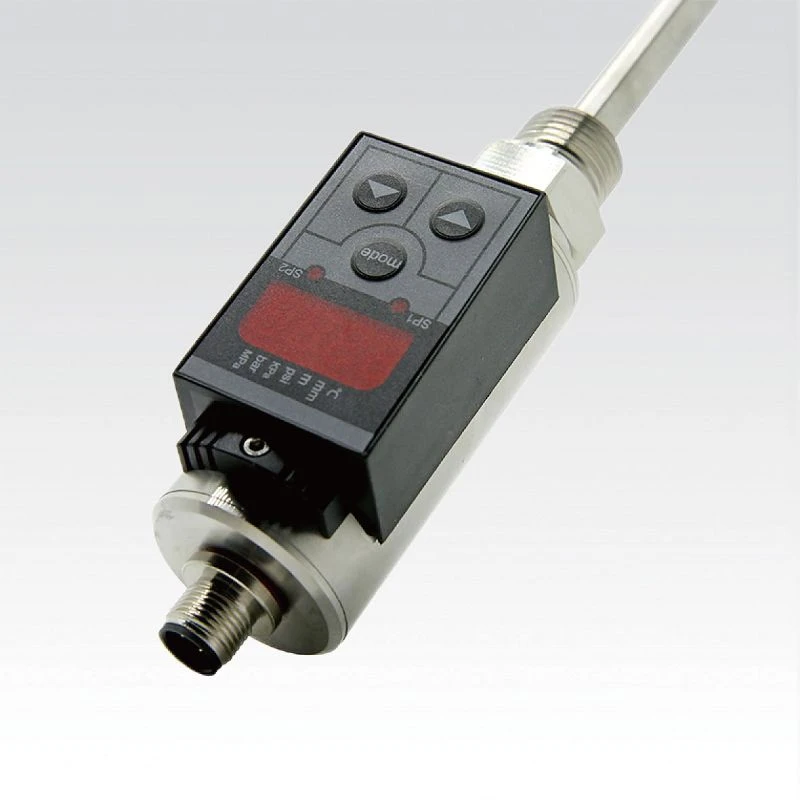
Temperature Switch VS Thermostat
The difference between a temperature switch and a thermostat includes the following.
|
Temperature Switch |
Thermostat |
|
The temperature switch is also known as a thermal switch. |
The thermostat is also known as an indicator or thermometer. |
|
The main function of this switch is to measure temperature. |
A thermostat device's function is to regulate temperature, |
|
This switch is a bi-stable electromechanical device. |
This is a closed-loop control device. |
|
Generally, these switches are classified into two types electronic and mechanical. |
Thermostats are classified into three types programmable, non-programmable and smart. |
|
This switch includes two main parts like sensing part and snap-action contacts. |
The thermostat includes different parts like flange, frame, housing, and wax element. |
Are Temperature Switches Normally Open or Closed
When the temperature switch is Normally Open (NO), then the switch contacts are NO normally open at minimum temperature. Similarly, Normally Closed (NC) means that the switch contacts are NC at minimal temperature.
This switch gets activated by a change in temperature & changes its condition from NO to close or from NC to open. The NO thermal switch contacts usually stay open which will close with the increase in temperature.
Important Parameters of Temperature Switches
The set point is perhaps the most important factor to consider when selecting a thermo switch. The thermo switch remains in its normal mode at temperatures below the set point, while it switches and exits its normal mode at temperatures above such point.
In addition, a thermo switch labeled as “X°C” has a set point of X.
We explained the difference between these two categories. You should choose one or two types based on what you are looking for.
Again, NC types are typically used for heating systems, while NO types are suitable for cooling systems.
The maximum current is another parameter to consider when selecting a thermo switch. This value is usually written on the thermo switch.
If you directly connect the thermo switch to the load, make sure that the current passing through the thermoswitch does not exceed the maximum limit. For higher amounts of current, you can connect the sensor output to a relay circuit.
Similar to current, we have a maximum voltage for thermo switches. the line voltage can be either AC or DC, and the thermoswitch works perfectly well in both modes.
How to Calibrate Temperature Switches
Before calibration
As with any process instrument calibration, before starting, isolate the measurement from the process, communicate with the control room, and make sure the calibration will not cause any alarms or unwanted consequences.
Visually check the switch to ensure it is not damaged and all connections look ok.
If the sensor is dirty, it should be cleaned before inserting it into the temperature block.
Generate a slow temperature ramp as input
If you are calibrating the temperature switch and its temperature sensor together, you need to generate a slow enough temperature ramp in the temperature source where you install the switch's temperature sensor.
This means you need to have a temperature source that can generate a controlled temperature ramp at a constant speed, as slow as the application requires.
In practice you can quickly reach a temperature set point close to the calibration range, let the temperature fully stabilize, and then start slowly ramping the temperature across the calibration range. After the calibration you can quickly return back to room temperature.
A temperature ramp like this is most commonly generated with a temperature dry block. Not all dry blocks are able to generate a suitably slow ramp. And you also need to be able to measure the generated temperature very accurately, while at the same time being able to measure the switch output signal. In addition, the calibration system should have the capability to automatically capture the input temperature at the exact moment when the switch output changes its state.
Use an external reference temperature sensor – don't use the internal one!
Temperature dry blocks always have an internal reference sensor, but do not use this when calibrating temperature switches!
The internal reference sensor is located in the bottom part of the temperature block, which is heated and/or cooled. The internal reference sensor is also usually close to the heating/cooling elements and responds quickly to any temperature changes.
From that temperature block, the temperature will transfer to the insert and from the insert it will transfer to the actual temperature sensor. This means that there is always a significant delay (lag) between the internal reference sensor and the sensor being calibrated, located in the hole in the insert.
Measuring the switch output
Once you have the input temperature ramp figured out, you also need to measure the switch output terminals and their state.
With a traditional open/close switch, you need to have a device that can measure if the switch contacts are open or closed.
If the switch is more modern with an electrical output, you need to be able to measure that. That may be current measurement for an mA signal, or voltage measurement for a voltage signal.
Anyhow, as the switch output has two states, you need to have a device that can measure and recognize both.
Capturing the operation points
To calibrate manually you need to start the temperature ramp and monitor the switch output. When the switch's status changes, you need to read what the input temperature is, i.e. what the reference temperature sensor is reading. That is the operating point of the temperature switch. Usually you want to calibrate both operation points (the “set” and “reset” points) with increasing and decreasing temperatures to see the difference between them, which is the hysteresis (deadband).
If you don't want to do that manually, then you need a system that can perform all of the required functions automatically, i.e. it needs to:
Generate the temperature ramp, going up and down at the required speed, within the required temperature range for the switch in question
Measure the switch's output state (open/close, on/off)
Measure the reference temperature sensor inserted in the temperature source
Capture the temperature when the switch changes state
Pre-calibration preparation (disconnect from process, isolate for safety, visual check, cleaning).
Insert the temperature switch's temperature sensor and a reference sensor into the temperature source.
Connect the switch's output to a measurement device that measures the switch's open/close status.
Quickly ramp the temperature close to the switch's operation range and wait for it to stabilize.
Very slowly ramp the temperature across the switch's nominal operation range.
When the switch output changes status (set point), capture the temperature in the temperature source.
Slowly ramp the temperature in the other direction until the switch operates again (reset point). Capture the temperature.
Repeat steps 5 to 7 as many times as needed to find the repeatability of the switch. Typical practice is three (3) repeats.
Ramp the temperature quickly back to room temperature.
Document the results of the calibration.
If the calibration failed and the switch did not meet the accuracy requirements, make the necessary adjustments, repair, or replace it.
Repeat the whole calibration process if adjustments were made in step
Connect the switch back to the process.
Common Uses in Industry Temperature Switch
Heat Treat/Oven
Temperature controllers are used in ovens and in heat-treating applications within furnaces, ceramic kilns, boilers, and heat exchangers.
Packaging
In the packaging world, machinery equipped with seal bars, glue applicators, hot melt functions, shrink wrap tunnels or label applicators must operate at designated temperatures and process time lengths. Temperature controllers precisely regulate these operations to ensure a high quality product output.
Plastics
Temperature control in the plastics industry is common on portable chillers, hoppers and dryers and molding and extruding equipment. In extruding equipment, temperature controllers are used to precisely monitor and control temperatures at different critical points in the production of plastic.
Healthcare
Temperature controllers are used in the healthcare industry to increase the accuracy of temperature control. Common equipment using temperature controllers includes laboratory and test equipment, autoclaves, incubators, refrigeration equipment, and crystallization growing chambers and test chambers where specimens must be kept or tests must be run within specific temperature parameters.
Food & Beverage
Common food processing applications involving temperature controllers include brewing, blending, sterilization, and cooking and baking ovens. Controllers regulate temperature and/or process time to ensure optimum performance.
1)Ensure the wiring of the temperature controller is fastness, to prevent effects the normal work due to the wiring and connection points.
2)Check up the wiring of the temperature sensor is fastness nor not.
3)Under the hot weather conditions, pay attention to ensure the environment temperature of the temperature controller in normal operating temperature scope. Take effective cooling measures when the environment temperature is too high.
4)Under moist climatic conditions, If the equipment at the stopped state, supplying power regularly to the temperature instrument to prevent the instrument was effected by damp and break down. After a long downtime, check up it carefully and supplying power for 4-6h, after that start to running.
5)Replace the disabled temperature controller and temperature sensor promptly. Inspect the type of temperature controller and voltage whether corresponding to the temperature control range and ensure the wiring correct.
FAQ
Q: What Are Temperature Switches?
Q: How Do Temperature Switches Work?
Q: Where Are Temperature Switches Used?
Q: What Are The Types Of Temperature Switch?
NO (normally opened ) or NC (normally closed)
Auto function or manual function
Standard / room / duct types
Q: What Is The Difference Between NO And NC Temperature Switches?
Q: What Is The Difference Between NTC And PTC Resistances?
Q: What is a temperature switch used for?
Q: Which is an example of a temperature switch?
Q: What does a thermal switch do?
Q: What is the difference between a thermostat and a temperature switch?
Q: Where is temperature switch located?
Q: How many types of temperature switch are there?
Q: Is A thermostat a switch?
Q: What are the 4 types of temperature?
Q: What is a temperature switch connected to in a cooling system?
Q: How do you adjust a temperature switch?
Q: How do you test a temperature switch?
Q: Which temperature sensor is best?
Q: What is the most popular temperature sensor?
Q: What are the advantages of temperature sensor?
As one of the most professional temperature switch manufacturers and suppliers in China, we're featured by quality products and low price. Welcome to wholesale the best selling temperature switch for sale here from our factory. Contact us for customized service.
Magnetic level Meter, Ultrasonic Level meter, hydac temperature Switch